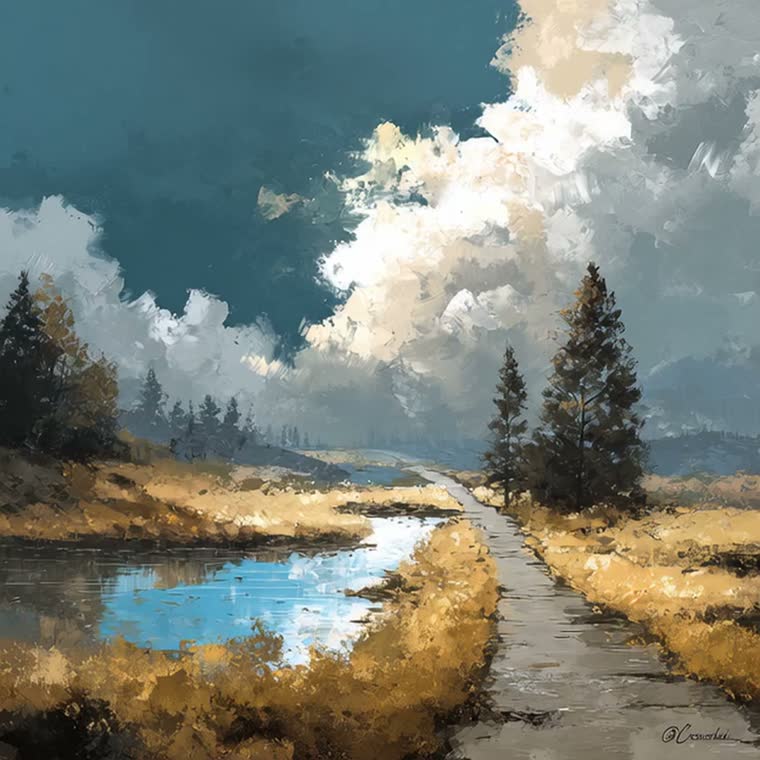
AI Image Tools
Everything You Need to Edit Photos Faster
Open the PicEditor AI tools library for background removal, photo enhancement, object cleanup, face swap, upscaling, and more focused image workflows.

AI Blemish Remover
FLUX 3 Image Klein

Ideogram 4.5
AI Portrait Retouching

Snatched Waist Editor
AI Facial Expression Changer

AI Texture Generator
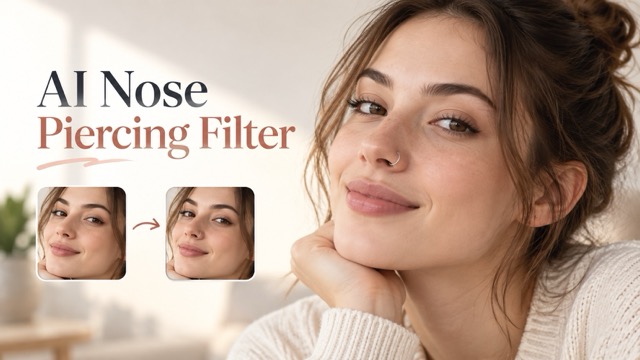
AI Nose Piercing Filter
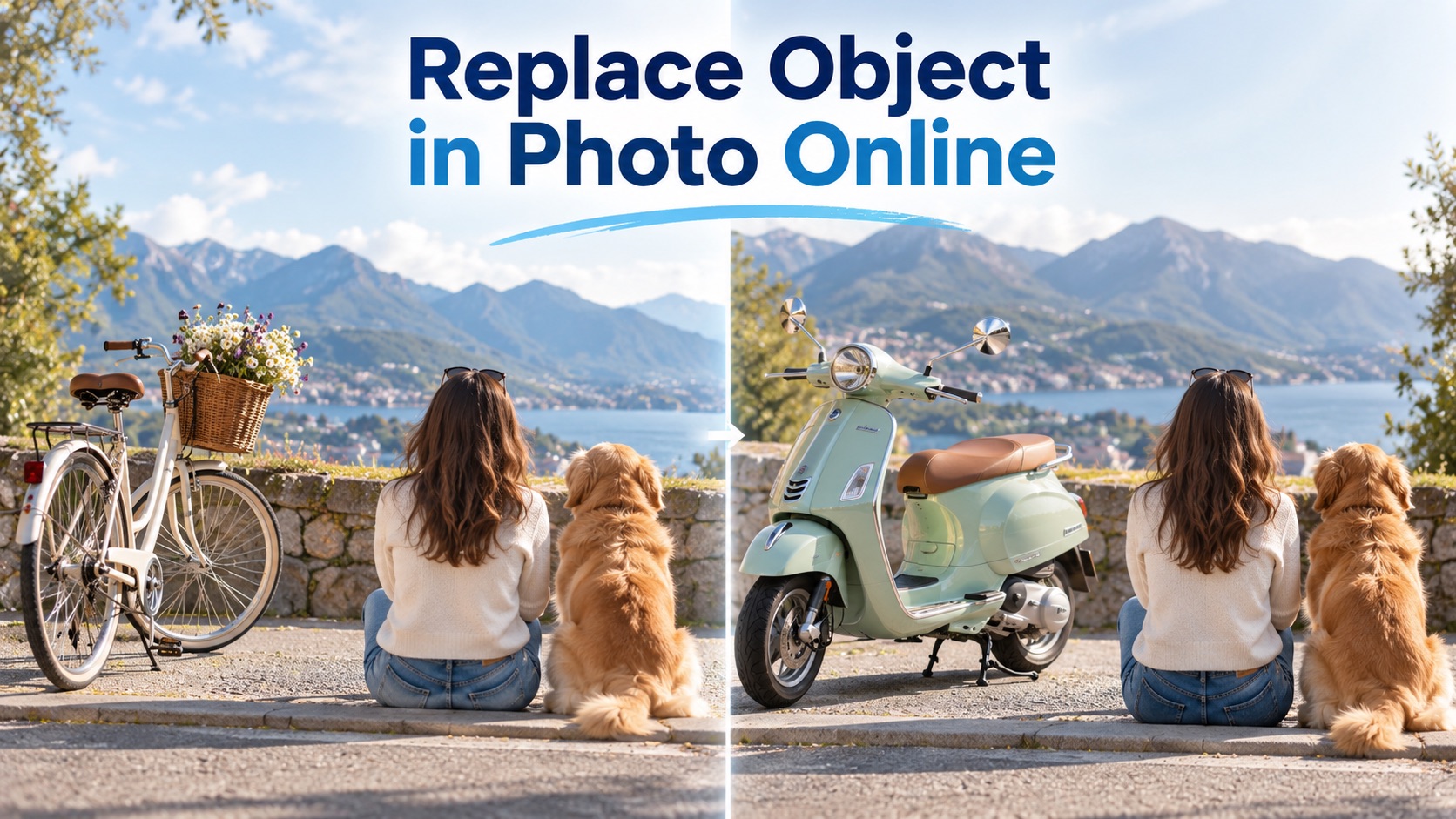
Replace Object in Photo Online
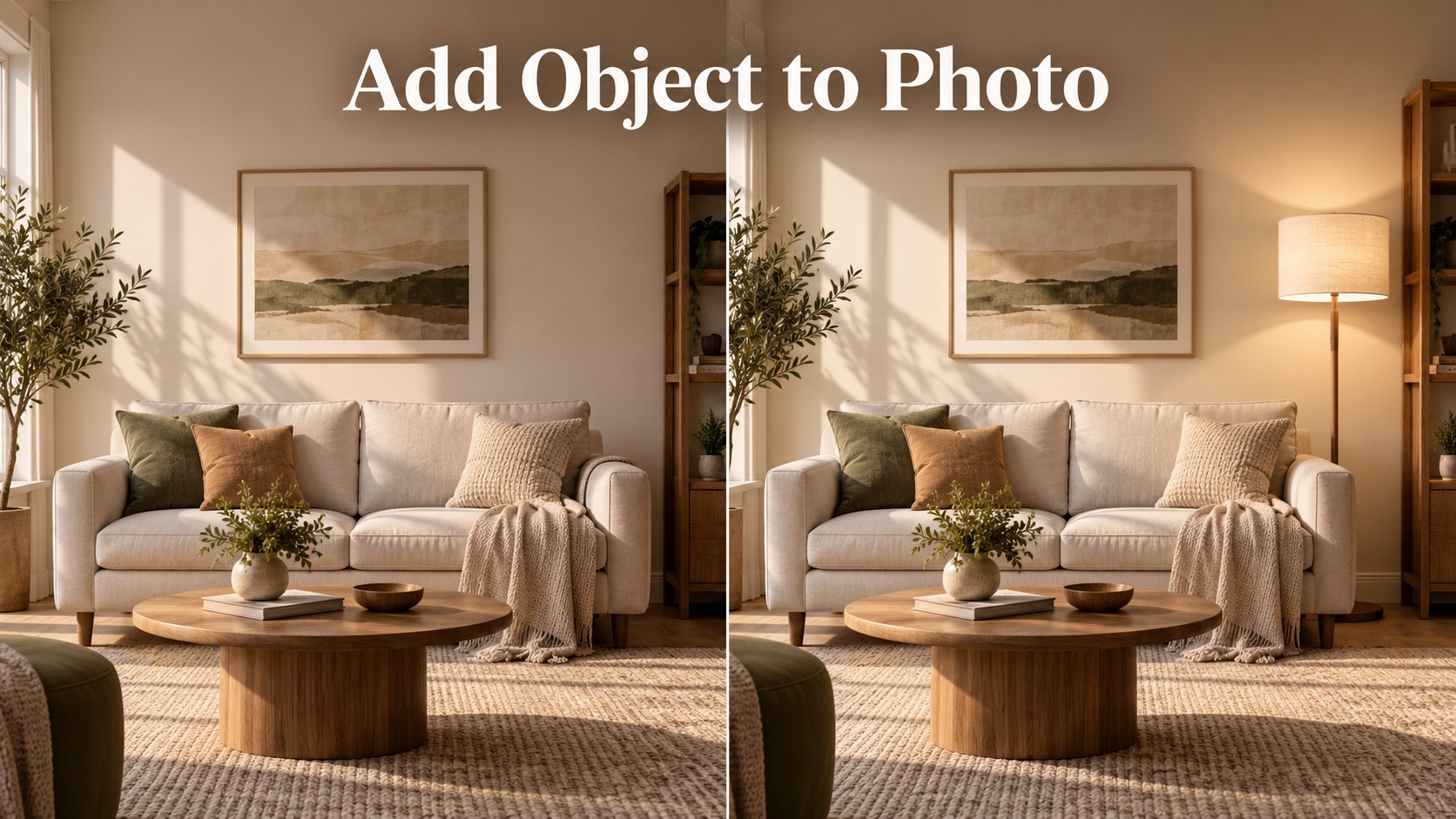
Add Object to Photo

Eyeliner Filter

AI Bust Down Filter

Image Splitter

Add White Background to Photo

Snapchat Text Remover
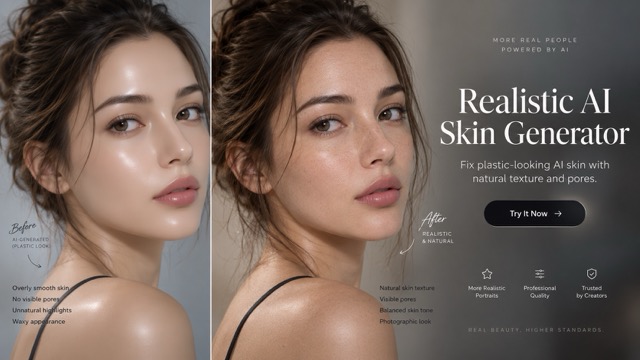
Realistic AI Skin Generator

Add speech bubble to photo
Change Photo Background

AI Clothes Wrinkle Remover
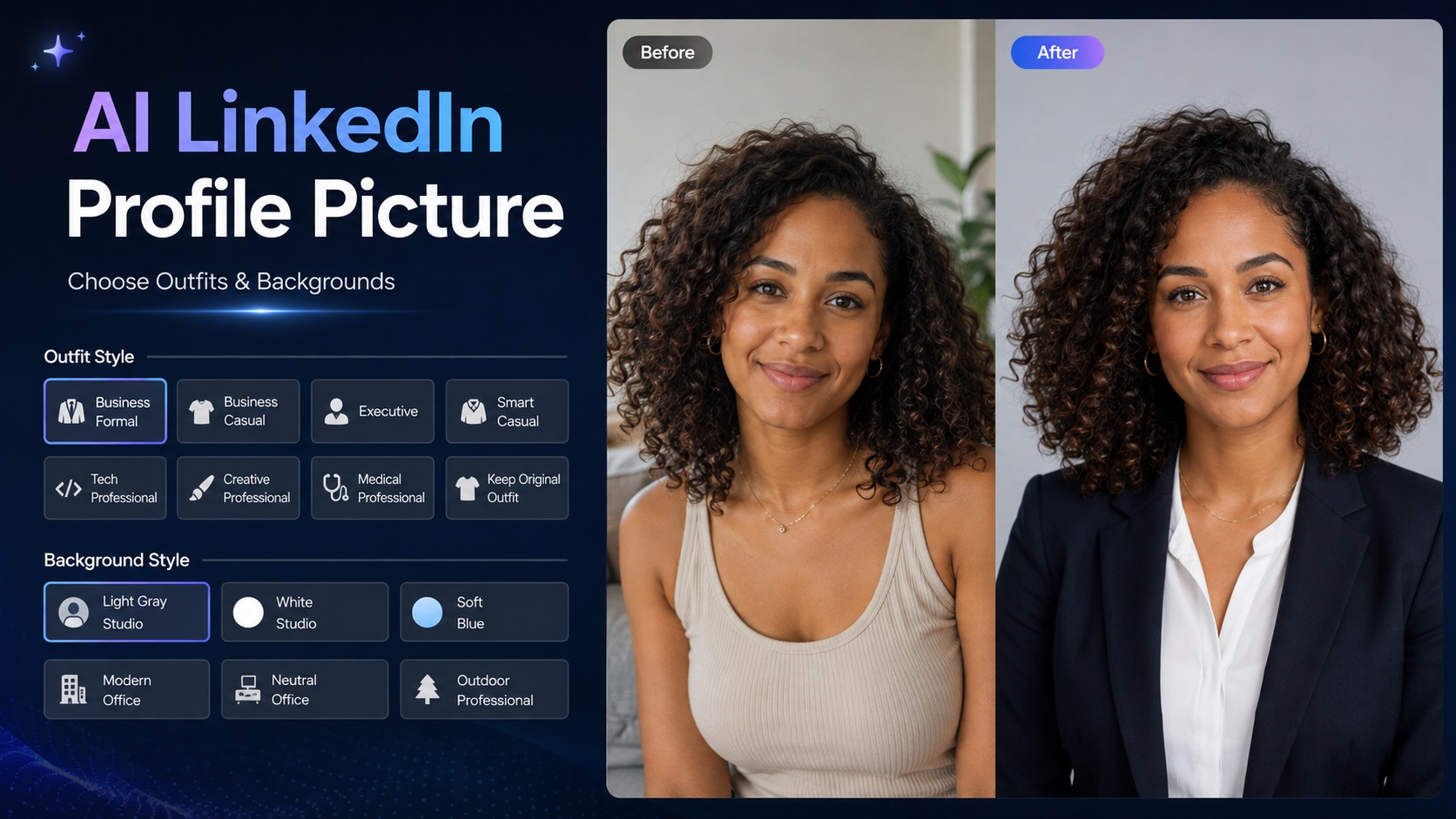
AI LinkedIn Profile Picture
GPT Transparent BG Image Editor
Image to Layers
3D Angle Editor

Change Background of Photo
Photo to Watercolor Converter for Watercolor Art
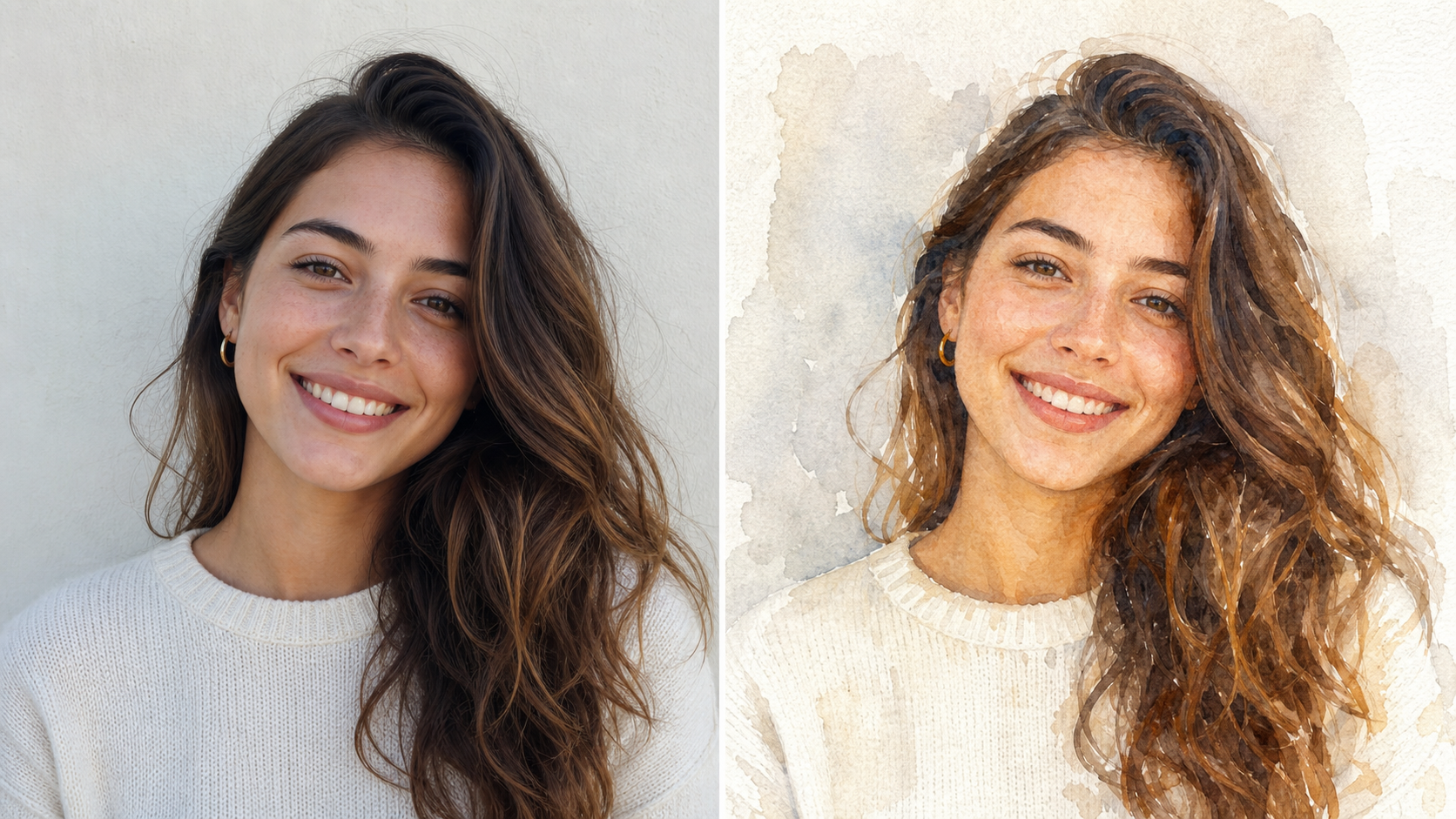
Upload a picture and let Photo to Watercolor turn the image into watercolor artwork.
Photo to Watercolor helps creators transform an uploaded photo into a soft watercolor interpretation while keeping the original scene readable. Use it for portraits, pets, landscapes, gifts, decor ideas, and social visuals.
How to Use Photo to Watercolor
Photo to Watercolor keeps the workflow focused: upload a source image, let the model create a watercolor interpretation, then review the result for subject clarity, color balance, and artistic texture.

Upload a Clear Photo
Begin with an image that shows the subject, lighting, edges, and background context clearly. Photo to Watercolor uses the upload as the visual foundation, so portraits, pet photos, travel scenes, flowers, architecture, and product shots benefit from readable detail before the Watercolor Filter is applied.

Generate the Watercolor Look
After upload, Photo to Watercolor studies the main subject, composition, color relationships, shadows, and important background cues before creating the watercolor version. The model translates photo detail into soft washes, pigment edges, subtle paper grain, and delicate brush movement while keeping the source image connected to the final artwork.

Review the Painted Result
Compare the uploaded image with the transformed result and choose the version that best fits your project. Photo to Watercolor is useful for profile artwork, framed gift concepts, content graphics, invitations, keepsakes, and creative studies. Review faces, subject edges, and background mood before using the final watercolor image.
Features of Photo to Watercolor
Photo to Watercolor combines source-photo preservation with expressive watercolor treatment. The workflow helps convert portraits, pets, products, landscapes, and everyday scenes into artwork with pigment wash, softened edges, paper texture, and recognizable structure.
Portraits with Watercolor Character
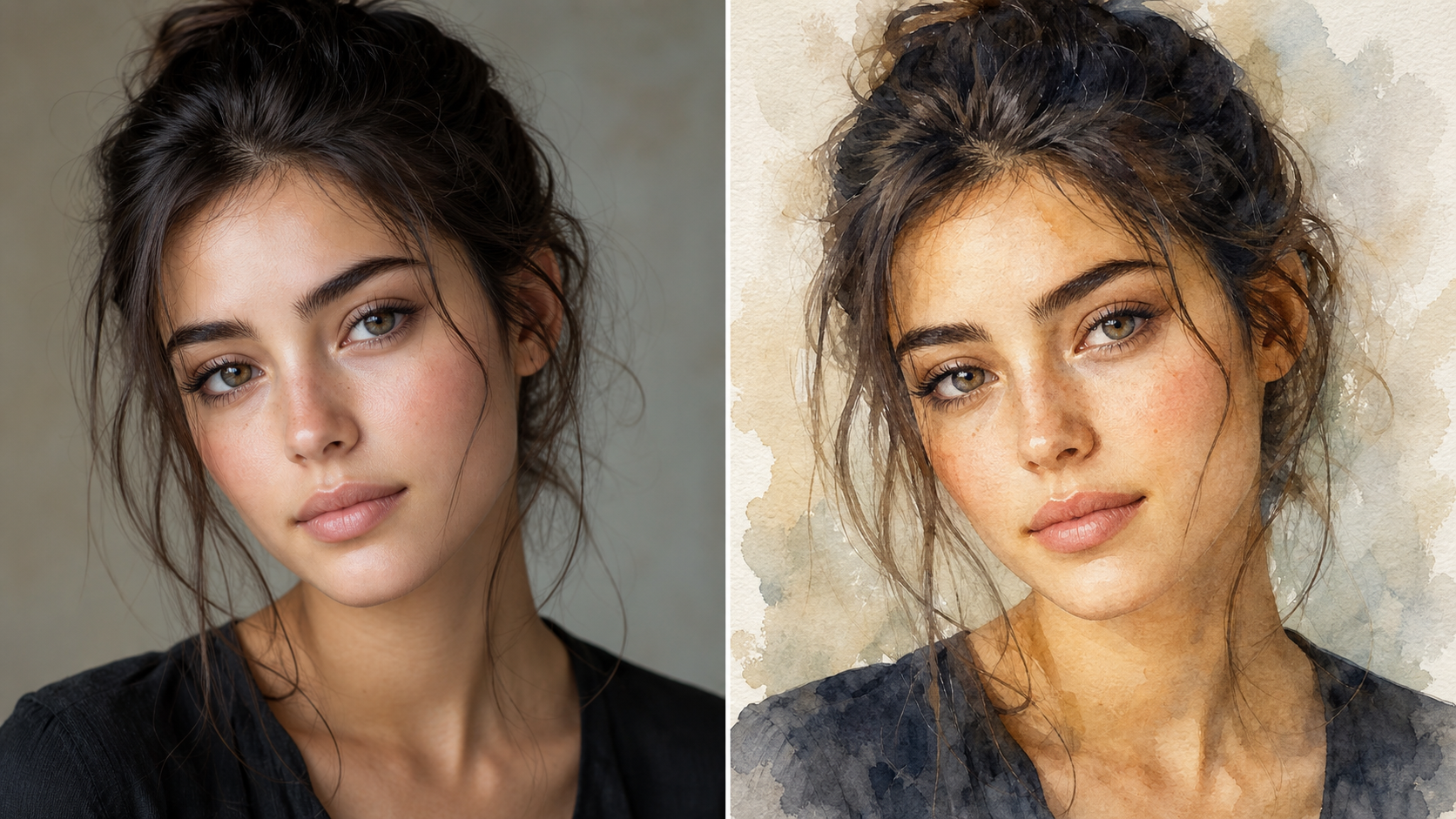
- Photo to Watercolor can reinterpret selfies, headshots, couple photos, and family portraits as gentle watercolor artwork while keeping people recognizable.
- Photo to Watercolor Converter should preserve face shape, expression, hair silhouette, clothing, pose, and camera angle.
- Use Photo to Watercolor when a portrait needs a softer, more personal finish for avatars, keepsakes, invitations, or framed creative ideas.
Soft Pigment, Paper Texture, and Color Wash
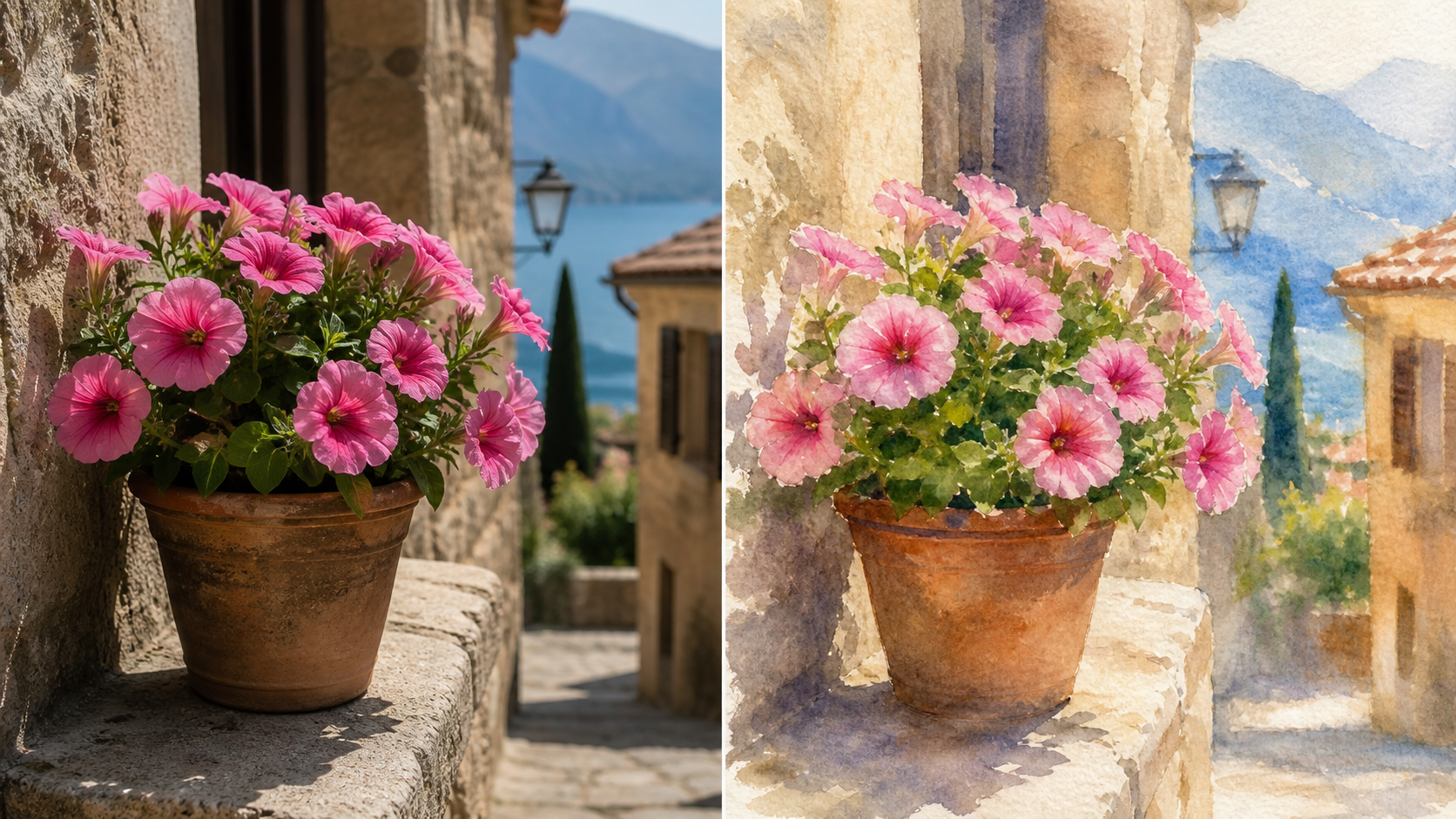
- Photo to Watercolor can turn natural shadows, fabric, skies, foliage, petals, hair, and surface detail into translucent pigment and paper-like texture.
- The Watercolor Effect should feel like a real medium shift, not a harsh overlay or generic blur.
- Use Photo to Watercolor when you want controlled softness, layered color, preserved composition, and a finished image that still respects the uploaded photo.
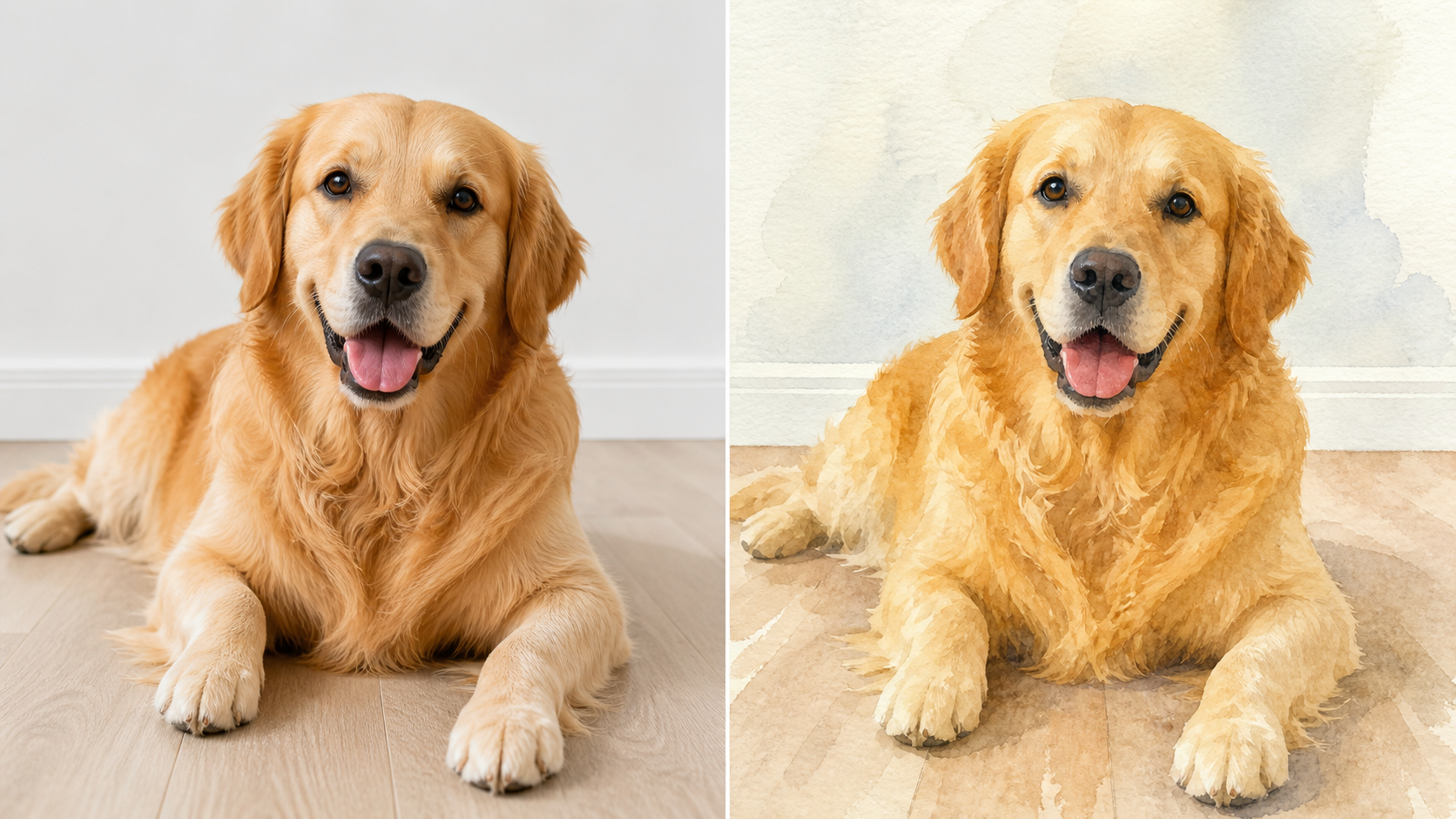
Watercolor Looks for Pets, Places, and Objects
- Photo to Watercolor is not limited to people. It can reinterpret pets, rooms, food, flowers, products, vehicles, city streets, and landscape scenes.
- A strong Photo to Watercolor result keeps the subject silhouette, important colors, and scene layout while simplifying busy areas into paintable forms.
- Choose the Photo to Watercolor Converter when ordinary images need a personal, giftable, or gallery-inspired watercolor finish.
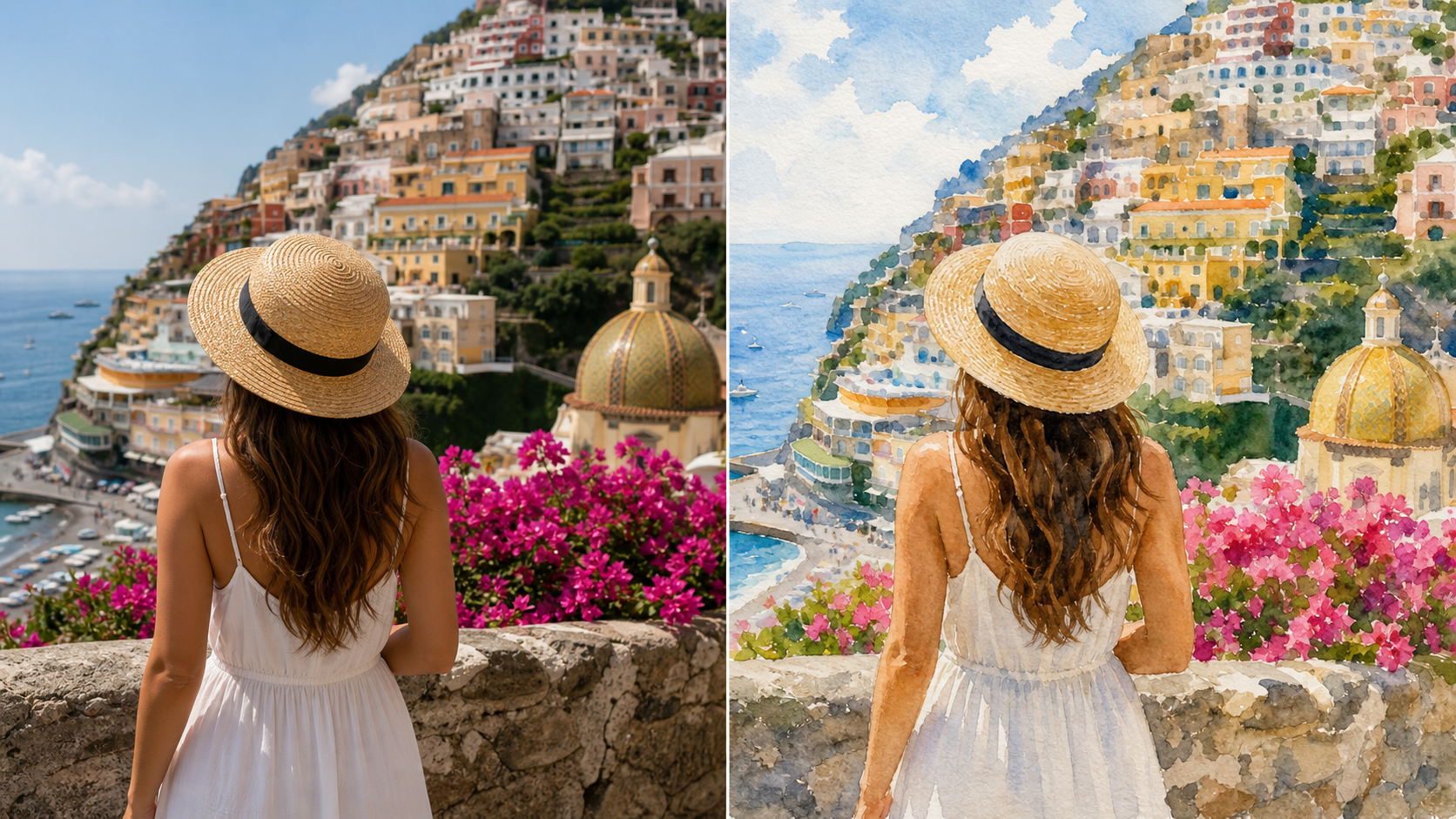
Creative Direction from Real Photos
- Photo to Watercolor gives designers, creators, teachers, sellers, and hobbyists a practical way to explore a watercolor direction from existing visuals.
- The Watercolor Filter can support posters, lesson material, mood boards, thumbnails, custom gifts, and early campaign drafts.
- Use Photo to Watercolor before commissioning, redrawing, or rebuilding a scene by hand, especially when you need quick visual options for review.
Why Choose Photo to Watercolor
Photo to Watercolor is practical for creators who want recognizable photo edits with a softer artistic surface. Photo to Watercolor supports portraits, pets, landscapes, decor concepts, social images, gifts, and creative references.

Create Portraits with a Softer Mood
A personal portrait can feel more memorable when it looks hand-painted rather than purely photographic. Photo to Watercolor can transform a clear face image into artwork with soft washes, delicate edges, and warmer color movement. Use Photo to Watercolor for creator avatars, couple art, family keepsakes, profile refreshes, or gift concepts where recognition still matters.

Make Pet Photos More Giftable
Pet images often carry personality through eyes, fur pattern, posture, and silhouette. Photo to Watercolor can reinterpret a dog, cat, horse, or other animal as watercolor artwork while keeping those details readable. The Photo to Watercolor Converter can support memorial concepts, framed previews, social posts, custom merchandise ideas, and personal galleries with a more tender finish.

Turn Landscapes into Gentle Art References
Travel scenes, gardens, skylines, interiors, and nature photos can become more expressive with watercolor color and texture. Photo to Watercolor can keep major perspective and lighting while simplifying visual noise into broader washes. Use the workflow for mood boards, wall-art ideas, trip albums, story references, and scenic experiments that feel calm and intentional.

Build Personal Decor and Gift Concepts
Watercolor-style images work well for cards, invitations, keepsake previews, home decor studies, and handmade gift ideas. Photo to Watercolor can turn a meaningful photo into a softer visual direction before you design a final layout. Use the Watercolor Effect when the subject should feel personal, expressive, and suitable for a printed or shared concept.

Refresh Social and Editorial Images
Social feeds, blog headers, thumbnails, and editorial drafts often need imagery that feels distinct but still grounded in a real moment. Photo to Watercolor can give an uploaded image a more illustrated presence without inventing a completely unrelated scene. Use the Photo to Watercolor Converter when ordinary photos need a tasteful artistic layer.

Study Color, Shape, and Simplification
Artists, teachers, and students can use Photo to Watercolor to compare photographic detail with watercolor simplification. It helps reveal which shapes, shadows, and color groups still define the subject after the medium shift. Apply a Watercolor Filter to create references for critique, practice, classroom examples, or early creative exploration.
What Users Say About Photo to Watercolor
Creators use Photo to Watercolor for portraits, pet art, travel scenes, lessons, product concepts, and social visuals. Photo to Watercolor gives them watercolor results without abandoning the uploaded image completely.
Photo to Watercolor helped me turn a plain portrait into artwork that still looked like the person in the upload. The color wash felt delicate, and the Photo to Watercolor Converter gave me a strong visual direction before I designed the final profile layout. It made the concept feel finished enough for a client review without losing the warmth of the original photo.
Photo to Watercolor helped me turn a plain portrait into artwork that still looked like the person in the upload. The color wash felt delicate, and the Photo to Watercolor Converter gave me a strong visual direction before I designed the final profile layout. It made the concept feel finished enough for a client review without losing the warmth of the original photo.
I used Photo to Watercolor for pet keepsake previews, and the results were much easier for customers to imagine as framed art. The Watercolor Effect kept the animal expression recognizable while making each concept feel softer and more personal. It also helped me show several directions before committing to a final printed design.
I used Photo to Watercolor for pet keepsake previews, and the results were much easier for customers to imagine as framed art. The Watercolor Effect kept the animal expression recognizable while making each concept feel softer and more personal. It also helped me show several directions before committing to a final printed design.
Photo to Watercolor became useful for travel storyboards because it changed ordinary snapshots into a consistent painted mood. The tool preserved the scene layout, but the pigment texture and soft edges made the images easier to place together on a concept board. That consistency helped the sequence feel more cohesive without redrawing each location.
Photo to Watercolor became useful for travel storyboards because it changed ordinary snapshots into a consistent painted mood. The tool preserved the scene layout, but the pigment texture and soft edges made the images easier to place together on a concept board. That consistency helped the sequence feel more cohesive without redrawing each location.
The Photo to Watercolor Converter helped my class compare photographic detail with watercolor simplification. Students could see which shapes, shadows, and colors mattered most, then use the Photo to Watercolor result as a reference for their own studies. It gave us a practical starting point for talking about composition and visual hierarchy.
The Photo to Watercolor Converter helped my class compare photographic detail with watercolor simplification. Students could see which shapes, shadows, and colors mattered most, then use the Photo to Watercolor result as a reference for their own studies. It gave us a practical starting point for talking about composition and visual hierarchy.
Photo to Watercolor gave our product images a quieter editorial style for early campaign mockups. We did not need a final illustration yet; we needed a fast visual test that kept the object clear while giving it watercolor character. The result helped stakeholders compare tone before we moved into layout work.
Photo to Watercolor gave our product images a quieter editorial style for early campaign mockups. We did not need a final illustration yet; we needed a fast visual test that kept the object clear while giving it watercolor character. The result helped stakeholders compare tone before we moved into layout work.
I like using Photo to Watercolor when a photo feels too literal for a post. The Watercolor Filter helps me create a more handmade look, but the finished image still feels tied to the moment I captured. It is useful when I want a softer visual without changing the story behind the picture.
I like using Photo to Watercolor when a photo feels too literal for a post. The Watercolor Filter helps me create a more handmade look, but the finished image still feels tied to the moment I captured. It is useful when I want a softer visual without changing the story behind the picture.


FAQs About Photo to Watercolor
These answers explain how Photo to Watercolor works, which images suit it, and how Photo to Watercolor can help creators turn uploaded pictures into recognizable watercolor-style artwork with clearer expectations.
Photo to Watercolor is an image transformation tool that turns an uploaded photo into watercolor-style artwork. Instead of creating an unrelated picture from text, it uses your source image as the foundation. The model studies the subject, composition, color, lighting, and background context, then creates a watercolor version with soft pigment, paper texture, and recognizable visual structure for creative reuse.
Photo to Watercolor works best with images that have a clear subject, balanced exposure, and enough visible detail for the model to understand forms and edges. Portraits, pets, flowers, buildings, food, rooms, products, and landscapes can all work well. Very dark, blurry, crowded, or heavily cropped images may still transform, but cleaner inputs usually create cleaner watercolor results more predictably.
The Photo to Watercolor Converter should preserve the main subject, facial identity when present, pose, camera angle, clothing, object shape, scene layout, and important background cues. It changes the medium and surface, not the core meaning of the upload. A good result should look painted while still feeling clearly based on your original image and its intent during the transformation.
A Watercolor Effect usually softens hard photographic edges, introduces translucent color variation, and creates a paper-like painted surface. It may simplify tiny background details so the subject reads more clearly as art. The goal is not to erase the photo, but to reinterpret it with watercolor texture, lighter edges, and more expressive pigment movement across the scene without visual clutter.
A Watercolor Filter is useful when a normal photo feels too literal for a creative project. It can help with profile art, gift previews, pet portraits, travel memories, wall-art concepts, social posts, mood boards, classroom studies, and early design direction. Use it when you want a recognizable subject with a softer, hand-painted atmosphere and a calmer visual tone and overall impact.
The final look can vary because every source image has different lighting, contrast, color, texture, and background complexity. Photo to Watercolor may emphasize paper grain in one image and stronger color wash in another. For stronger results, use a photo with a visible subject, avoid heavy blur, and choose an image where important details are not hidden in shadow overall.
For a better Photo to Watercolor result, choose a source image with readable edges, clean lighting, and a subject that is not buried in clutter. If the first output feels too busy, try a simpler crop or a picture with more contrast. Small input improvements can make the final brushwork, paper texture, and subject structure easier to read after conversion.
Use the Photo to Watercolor Converter when you already have a photo that carries the person, pet, place, or object you want to keep. It can help you explore a watercolor direction before making posters, cards, gifts, social graphics, or classroom references. Review the result carefully and combine it with your own design workflow when preparing final materials for review.
Create Watercolor Artwork from Your Photo
Upload an image and use Photo to Watercolor to create a watercolor version with recognizable subject detail. Photo to Watercolor helps you explore portraits, gifts, social visuals, decor ideas, and creative references.